

Guides
-
Home
-
Guides

Print engineering guides
This hub collects durable, technical web-to-print guides: how-does-this-work references revised in place rather than dated like an article. Guides explain imposition and ganging, screen-to-print colour management, and variable data printing in plain, sourced terms, and link the services that put each answer into practice.
Reviewed by CEO, Netbase JSC · Updated 15 Oct 2026

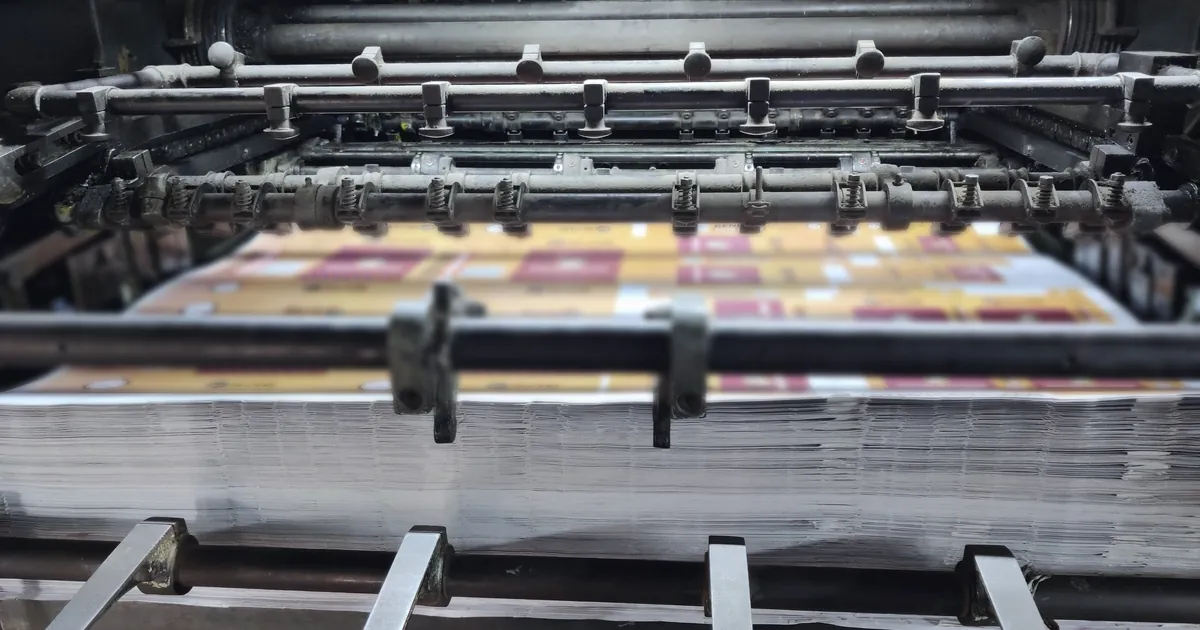
A monitor emits light in an RGB gamut; a printed sheet reflects light through CMYK or spot ink on a substrate, a smaller, differently shaped gamut. ICC profiles and a chosen rendering intent manage that gap predictably, but do not erase it: an identical on-screen and printed appearance is not achievable.
Imposition and ganging for online print orders
Imposition arranges pages or jobs on a press sheet so printing and finishing run correctly; ganging combines separate jobs on one sheet to use its area fully. An automated web-to-print order needs trim size, bleed, fold or cut lines and finishing method recorded as data, not assumed, before imposition can place it unattended.
Variable data printing in an online storefront
Variable data printing merges one fixed design template with a separate data record per recipient or item, producing a distinct piece for each row without hand layout. A storefront needs the template's variable fields and the data file's structure to match exactly, and every record validated before a job reaches print.
What belongs in this family?
A guide answers one "how does this work" question about web-to-print production, and it is written to be revised in place rather than republished on a schedule. It carries no publication cadence as a promise and no ranking signal tied to a date; it is accurate on the day it ships and corrected in place when practice or a referenced specification changes. We engineer print output: PDF generation to a client-specified standard, CMYK and spot colour handling, ICC profile selection, bleed and trim geometry, imposition and automated preflight, and this family is the reference layer behind that engineering work, written for the technical reader rather than the buyer who has not yet decided to commission anything.
Which guides are published?
Three guides are live today. Imposition and ganging for online print orders explains how pages and jobs are arranged on a press sheet, and where an automated storefront has to supply the data an imposition step needs. Why screen colour does not match the printed sheet covers ICC profiles and rendering intents, and states plainly that an identical on-screen and printed appearance is not achievable. Variable data printing in an online storefront covers template and data-record structures and what they imply for the print-ready output a storefront has to generate.
How is a guide different from an insight article?
An insight is dated analysis: it argues a position, states when it was written, and can be wrong in a way later evidence corrects. A guide is closer to reference documentation: it explains a mechanism - imposition, colour reproduction, a data format - that does not change on a news cycle, and it is maintained by editing the same page rather than publishing a follow-up. Where the two families cover adjacent ground, the guide is the one a technical reader bookmarks and the insight is the one a buyer reads once to decide something.
Which guide topics are covered elsewhere today?
Several admitted guide topics - print-ready PDF requirements, bleed and TrimBox setup, CMYK and spot colour handling, automated preflight rules, quantity-break pricing and web-to-print RFP requirements - are currently published under Insights rather than under this hub, because those pages were drafted and released before this family existed. Moving any of them here, with a one-hop redirect, is a separate admission decision for a later release; this hub does not duplicate them at a second URL in the meantime.
What should you do before reading a guide?
Bring the detail that makes a guide useful: the file or job you are checking, the press or workflow it has to run on, and the specification your printer has already given you in writing. A guide states what is typical and sources what it can; your printer's own written specification always takes precedence over a general guide. If a guide raises a question specific to your build, a project brief that names the file, product or data structure in question is the fastest way to a scoped answer.
What does a guide claim, and what does it not claim?
Where a technical standard is named, it describes the output specification an engagement produces to, not a credential Web2Print Solutions holds. Web2Print Solutions claims no certification, accreditation, audit result or named compliance standard as a held credential. A guide states what is typical and sources what it can; it is not a substitute for your own printer's written specification.
Sources
- docs/strategy/information-architecture.md section 4.1, accessed 2026-10-15.
- data/evidence/claim-registry.csv, accessed 2026-10-15.