

Web-to-print for Singapore print businesses
Web2Print Solutions has no Singapore office, staff or entity; every engagement for a Singapore print business is delivered remotely from Hanoi, Vietnam by Netbase JSC. For Singapore buyers this means configuring a storefront's GST tax invoices, InvoiceNow (Peppol) transmission, PDPA-aligned data handling and PayNow checkout, not adding a Singapore team.
Start a project brief Explore servicesReviewed by CEO, Netbase JSC · Published 1 Oct 2026 · Updated 1 Oct 2026

What is web-to-print for Singapore print businesses?
Netbase JSC, which operates Web2Print Solutions, configures web-to-print storefronts for print businesses selling into Singapore. All engineering and delivery for Web2Print Solutions is performed remote-first from Hanoi, Vietnam. Web2Print Solutions has no office, legal entity, employee base, representative or local support window in any other location. A Singapore engagement configures a storefront's tax invoices, address format, carriers and payment methods, delivered remotely from Hanoi.
This page is one of the markets Web2Print Solutions configures for. The distinguishing detail for Singapore is less the GST rate than InvoiceNow: a nationwide Peppol-based e-invoicing network Singapore is extending from voluntary use into a phased GST reporting requirement, which a storefront's invoicing layer either supports or does not.
Key takeaways
- GST is a single national rate, but the harder requirement is GST InvoiceNow: GST-registered businesses are being moved, in phases starting 1 May 2025, onto transmitting invoice data to IRAS through the Peppol-based InvoiceNow network, not just charging the correct rate.
- InvoiceNow runs on a five-corner model: invoice data passes through an IMDA-approved access point to IRAS, which means a storefront needs either a direct Peppol connection or an access point partner, not a PDF emailed to the buyer.
- A Singapore address carries a block or house number, a unit number such as a floor-and-unit code, and a six-digit postal code, with no state or province field at all.
- SingPost and Ninja Van are the two carrier integrations a Singapore checkout and order-status page most often need.
- PayNow, the bank-linked real-time payment network overseen by the Monetary Authority of Singapore, sits alongside card payment as a checkout option Singapore buyers expect to see.
How does an order move from checkout to delivery in Singapore?
The buyer configures a product and sees a GST-inclusive price. At checkout, the storefront issues a tax invoice carrying the seller's GST registration number and the GST amount, structured so the same data can later be transmitted through InvoiceNow, not just printed as a PDF. The buyer pays by PayNow or card, the order becomes a production job, and once produced it is handed to SingPost or Ninja Van with a block, unit and postal code address, tracked through that carrier rather than the storefront.
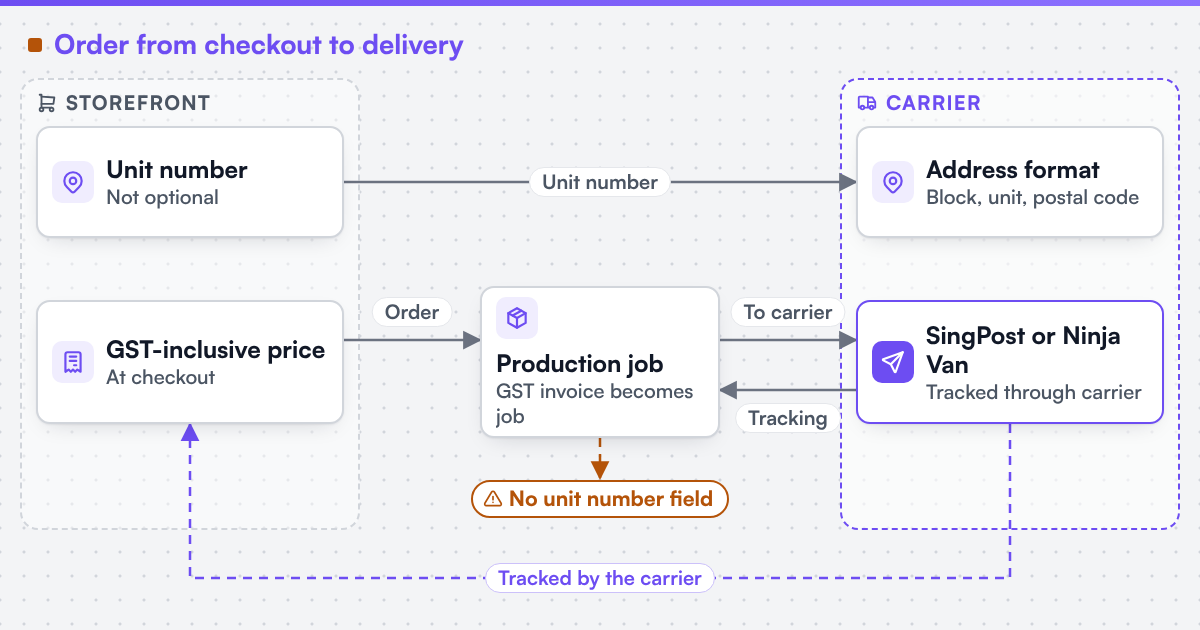 (opens the full-size diagram in a new tab)
What GST and InvoiceNow rules does a Singapore storefront need to apply?
-
GST
A single national rate, charged on standard-rated printed products and finishing add-ons, with GST-inclusive price display required
-
Tax invoice
Must show the seller's GST registration number, a sequential invoice number, the GST amount or an inclusive-of-GST statement, and the other fields IRAS specifies
-
GST InvoiceNow
Rolling out in phases from 1 May 2025; a business's invoice data needs to reach IRAS through an IMDA-approved access point on the Peppol network once its phase arrives
-
Peppol ID
A business transacting on InvoiceNow needs a Peppol ID tied to its UEN, listed in the SG Peppol Directory, which is account setup rather than a storefront feature
A storefront that only emails a PDF receipt has nowhere to plug in Peppol transmission later. The InvoiceNow connection is web-to-print implementation work scoped alongside the pricing engine, not an afterthought added once a business's phase is announced.
What units, address format and carriers does Singapore use?
-
Paper sizes
A-series (A4, A5, A3), grams per square metre
-
Address format
Block or house number, street name, unit number (for example #12-34), building name where relevant, six-digit postal code, no state field
-
Carriers
SingPost, Ninja Van
-
Payment
PayNow (bank-linked, paid via mobile number, NRIC/FIN or UEN), cards; invoice terms for trade accounts
A Singapore address form copied from a UK or Australian shape has no field for the unit number, which is not optional for most residential and commercial deliveries.
What privacy and accessibility law should a Singapore engagement respect?
A Singapore storefront that collects customer names, addresses and order history sits under the Personal Data Protection Act, administered by the Personal Data Protection Commission, which reaches any organisation collecting, using or disclosing personal data in Singapore regardless of where it is based. Singapore has no general private-sector web-accessibility law: the Digital Service Standards mandate WCAG 2.1 AA for government digital services, administered through the Ministry of Digital Development and Information, while private-sector accessibility follows the same guidelines voluntarily. Both are context an engagement's build must respect, confirmed with the client's own counsel; neither is a certification Web2Print Solutions holds.
What does a Singapore market engagement include, and what does it not?
Included
- GST-compliant tax invoice fields, structured for InvoiceNow transmission
- PayNow and card checkout integration
- Block, unit and postal code address validation, SingPost or Ninja Van carrier integration
- A-series product templates
Not included
- Registering the client for GST, a UEN or a Peppol ID
- Holding or settling the client's PayNow or bank account funds
- A Singapore office, staff, entity or local support window
- Advice that substitutes for the client's own accountant
What proof already exists for the Singapore market?
Netbase JSC, which operates Web2Print Solutions, has delivered 50+ web-to-print platforms. Botak Sign, a Singapore sign, banner and display printer, runs its storefront on web-to-print components Netbase JSC delivered. Live store using web-to-print components delivered by Netbase JSC, which operates Web2Print Solutions. No GST InvoiceNow case study is published under the Web2Print Solutions name yet; where that record does not exist, this page says so.
What is the time-zone difference with a team based in Hanoi?
| Factor | Detail | Applies to |
|---|---|---|
| Hours difference from Hanoi | None; Hanoi and Singapore share the same UTC+7 offset | Singapore |
| Collaboration pattern | Asynchronous, written change-control process used everywhere on this site, not a promised response window | Singapore |
Send a project brief with your GST registration status, whether a GST InvoiceNow phase already applies to your business, your current storefront platform, and your carrier accounts.
Discuss your web-to-print project
Frequently asked questions
It produces invoice data in a structure an IMDA-approved access point can transmit; the access point relationship and Peppol ID registration are account setup the client holds, not something Web2Print Solutions operates for them.
No. Delivery is entirely remote from Hanoi, Vietnam. The client's own Singapore entity holds the GST registration, UEN, PayNow-linked bank account and carrier contracts; the engagement configures the storefront to use them correctly.
Yes, with GST-inclusive retail pricing and net trade pricing itemised at invoice stage, confirmed with the client's own accountant.
The data structure and access point connection are built as configuration the client can activate, not a rebuild.
Client profiles in Singapore
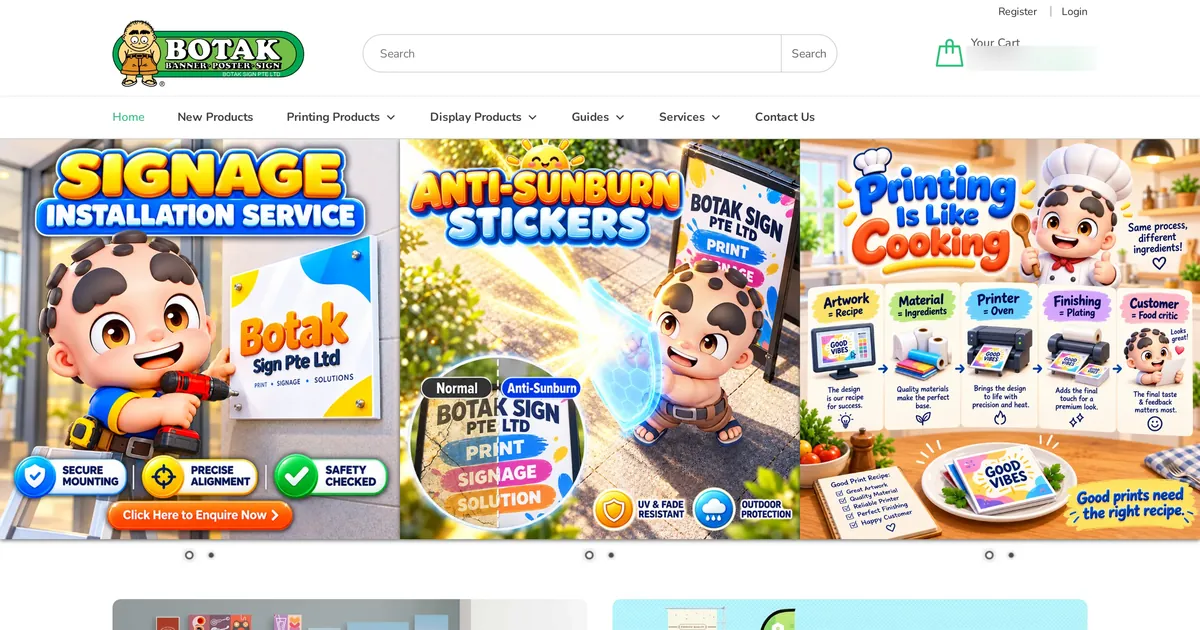
Botak Sign is a Singapore sign, banner and display printer whose WooCommerce store sells several hundred printing and display products online. Customers can upload a full design or design online in the browser, using web-to-print components delivered by Netbase JSC, which also carried out a migration and upgrade project. The store was live on 2026-09-30.
Learn More
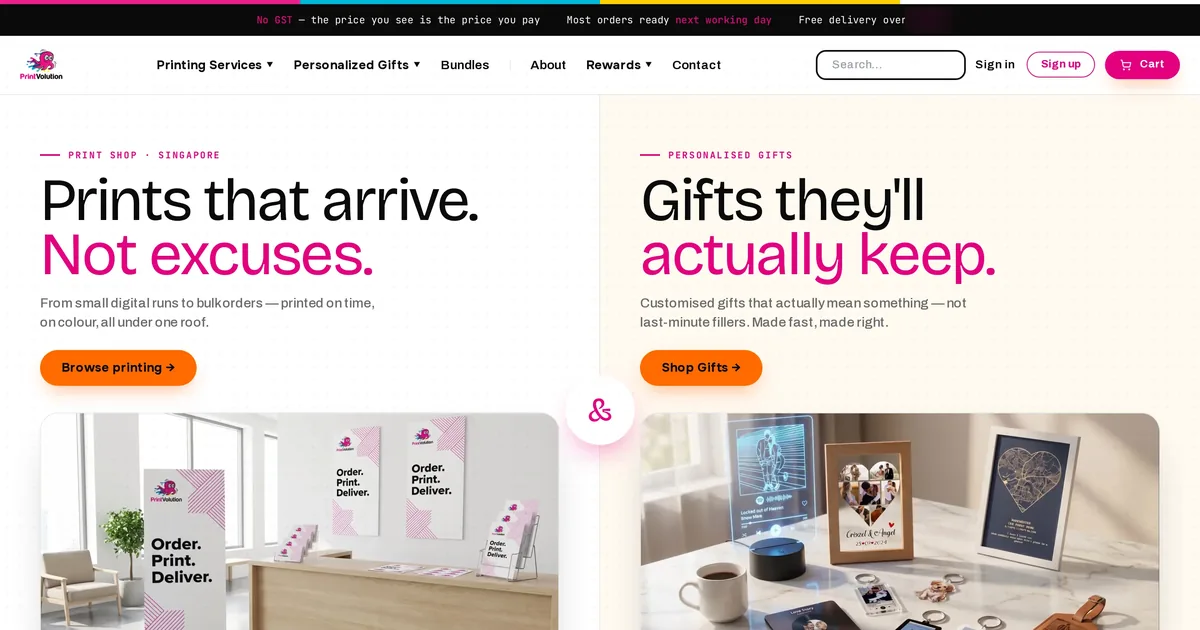
Printvolution is a commercial print store in Singapore. Netbase JSC's project records hold a custom web-to-print engagement for it from 2023-02 to 2025-10, with 14 recorded tasks and 3 milestones. The store runs on a custom storefront and is a live store, checked 2026-10-12.
Learn More
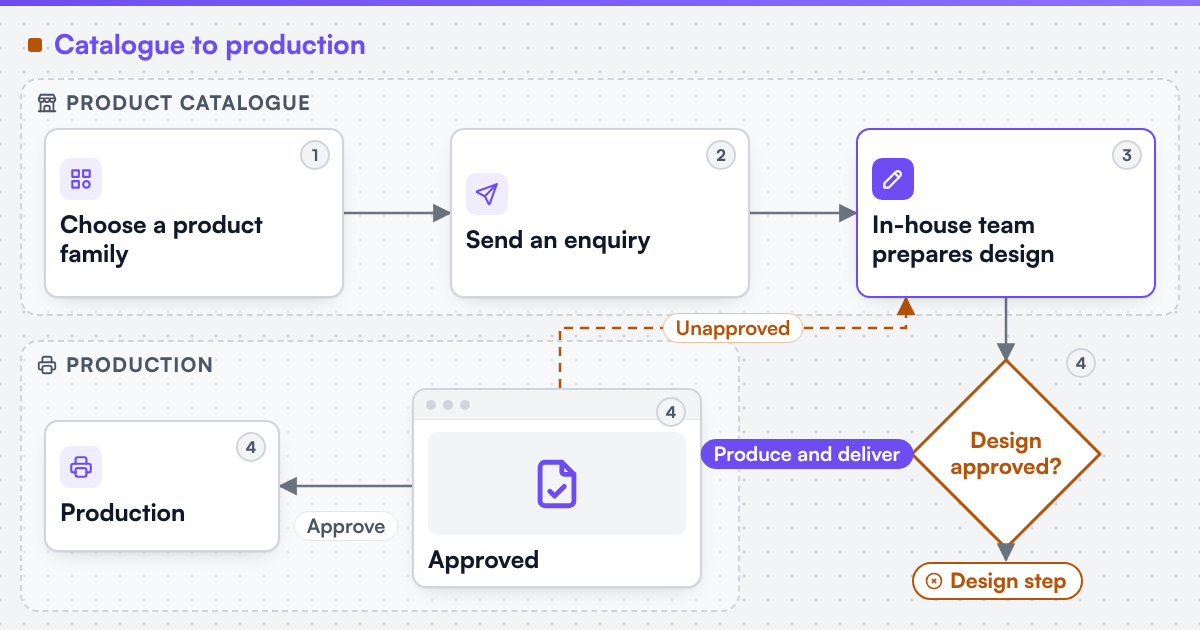
YouPrint is a Singapore digital printing company whose WordPress catalogue covers name cards, banners, signage and stickers, ordered through a quote-request form. Netbase JSC's project records hold a custom web-to-print engagement from October 2021 to November 2022 covering an online designer, checkout and payment features; Netbase JSC checked the live store on 2026-10-12.
Learn More
References (6)
- IRAS, Current GST rates, accessed 2026-10-01.
- IRAS, Invoicing, price display and record keeping, accessed 2026-10-01.
- IMDA, InvoiceNow, accessed 2026-10-01.
- PDPC, Personal Data Protection Act, accessed 2026-10-01.
- MAS, E-Payments, accessed 2026-10-01.
- MDDI, Designing for digital accessibility and inclusion, accessed 2026-10-01.