Web-to-print for packaging and label converters
Packaging and label converters use web-to-print to take structural detail online: a dieline, substrate and finish options, and a label's roll direction, core size and repeat. The engineering work is a configurator that rejects a structurally invalid job, priced at the quantity breaks a press run supports, with a proof that shows the folded or applied result.
Start a project brief Explore servicesReviewed by CEO, Netbase JSC · Published 29 Sep 2026 · Updated 3 Oct 2026

How does a packaging or label converter take an order?
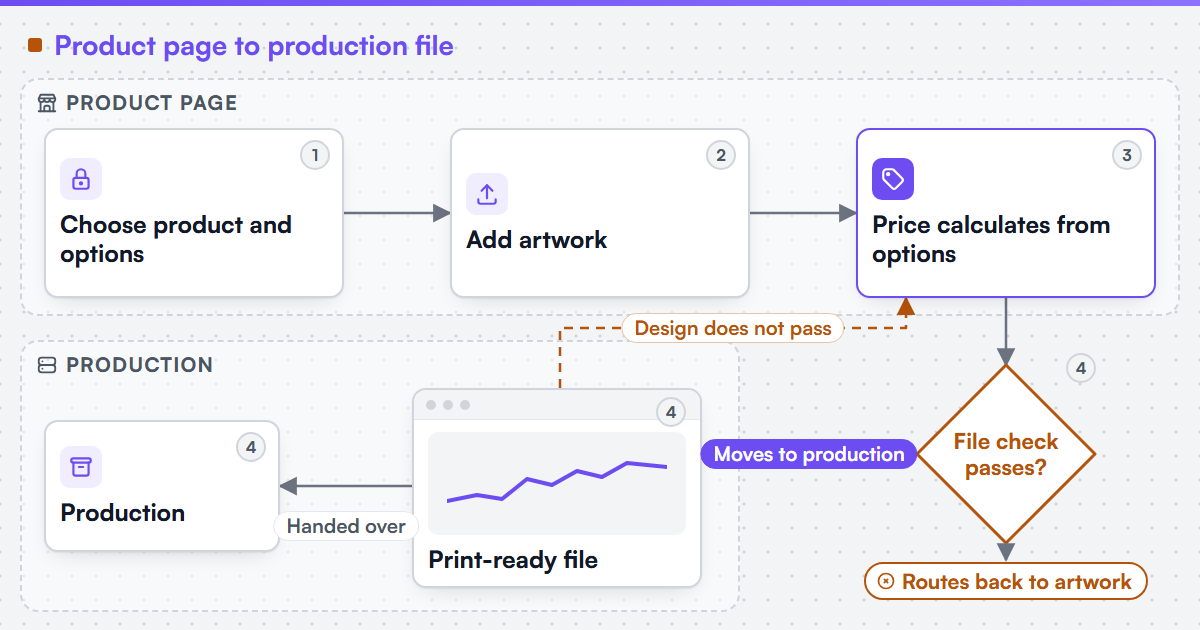
A packaging or label converter sells a structural product, not a flat sheet. A folding carton, a corrugated box or a pouch is defined by a dieline before it is defined by artwork; a label is defined by its roll direction, core size, repeat and liner before it is defined by its design. A customer - often a brand or a co-packer, not a print buyer in the ordinary sense - needs to specify the structure correctly, place artwork onto it without breaking bleed or fold lines, choose a substrate and finish the converter can actually run, and see a proof that shows what the structure looks like assembled, not just what the artwork looks like flat.
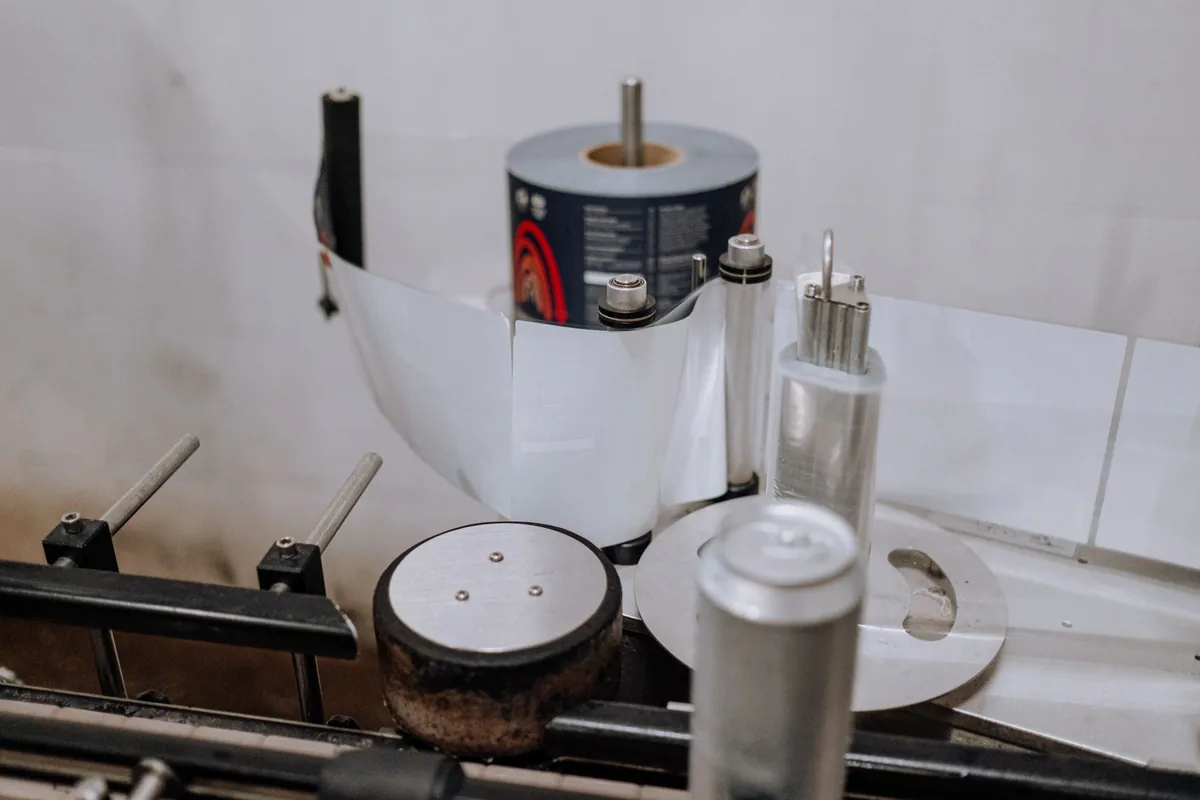
Web-to-print for this segment is not a catalogue of finished sizes. It is a configurator that understands which combinations of structure, substrate, finish and quantity are producible on the converter's own equipment, and that stops an order before it becomes a job that cannot run.
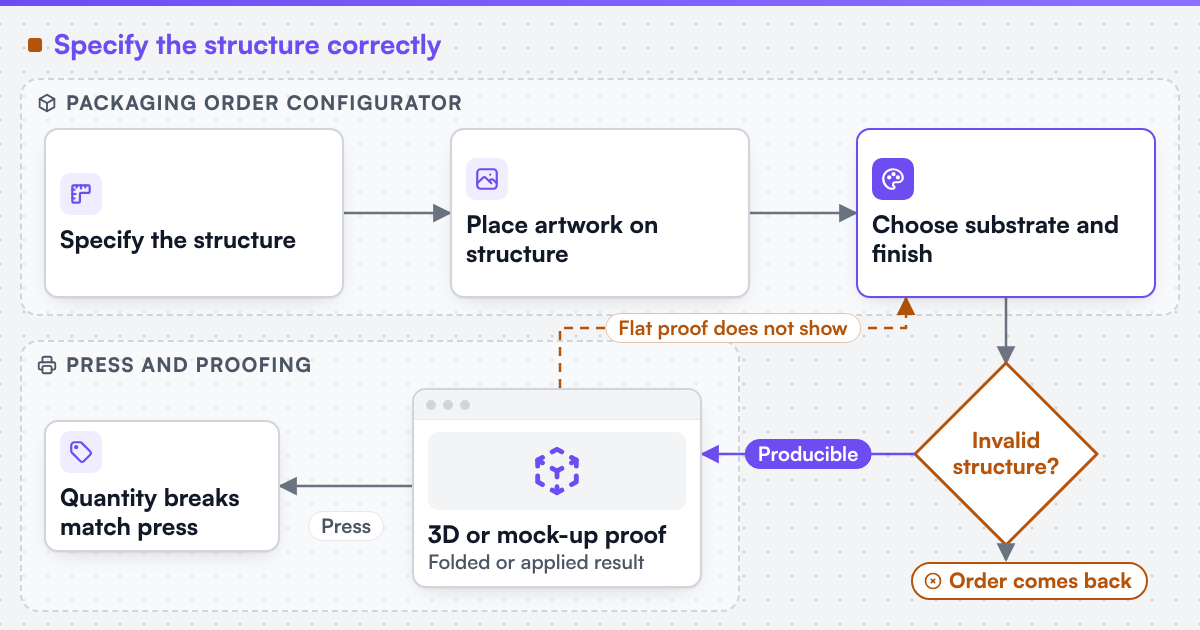 (opens the full-size diagram in a new tab)
Key takeaways
- Packaging and label web-to-print is a configurator problem first: the structure, substrate, finish and quantity have to be producible before artwork is even considered.
- A generic flat-print order form accepts structurally invalid jobs, found only once prepress or a physical sample exists.
- Label orders need fields - roll direction, core size, unwind direction and repeat - that a general print order form never asks for.
- A proof that shows only flat artwork does not show how a carton folds, a pouch wraps or a label applies.
- Quantity breaks should match the converter's own run lengths and make-ready, not an arbitrary list of numbers.
Where does the packaging and label ordering flow break?
-
Structurally invalid jobs accepted
A tool built for flat print lets a customer submit a carton with panels that do not fold, or a label repeat that does not match the press's tooling; the error surfaces in prepress.
-
Substrate and finish listed, not constrained
Every combination appears selectable when a given structure or press only supports some of them; the customer picks an invalid one and the order comes back for correction.
-
Flat proof hides the structural result
A customer approves artwork laid flat and only discovers how it folds, wraps or applies once a sample or the production run exists.
-
Label fields treated as an afterthought
Roll direction, core size, unwind direction and repeat are label-specific fields a general order form omits, so someone calls the customer to fill the gaps.
-
Quantity breaks ignore press reality
A configurator that allows any quantity, instead of the breaks the converter's run lengths support, produces orders that are valid but commercially wrong for the press.
Which routes can a packaging or label converter take?
Web2Print Solutions provides scoped services for new web-to-print setup, upgrades, migration and software integration for media organisations, print businesses and enterprise teams.
-
A structural configurator
We can build custom product configurators and browser design tools that emit print-ready artwork to an agreed specification: dieline and structural-spec handling, substrate and finish constraints tied to what the converter can run, and quantity breaks that match press capability are scoped as print product configurator work.
-
Pricing
Where quantity breaks and substrate or finish combinations need to price correctly against the converter's own run-length and make-ready economics, that is print pricing engine work, accepted against the converter's own known-good quotes.
Who is this not for?
A business selling flat, non-structural print - flyers, business cards, standard posters - does not need dieline logic, substrate-finish constraints or label roll fields, and a standard product configurator serves it better without the added complexity. Web2Print Solutions does not design packaging structures or create dielines from scratch; the work is the ordering and configuration system built around structures and specifications the converter already runs.
Which systems does a packaging or label converter run?
The typical stack has a dieline library, often built to structural design codes such as those published by FEFCO for corrugated packaging; a substrate and finish matrix tied to what each press or line can run; a proofing step that needs to show both the flat artwork and a 3D or mock-up view of the folded, wrapped or applied result, alongside a conventional flat proof checked against print-ready settings such as those published by the Ghent Workgroup; a label-specific set of fields - roll direction, core size, unwind and repeat - that a general print order form omits; and a barcode or identifier scheme, commonly built on GS1 standards, that a label often has to carry as part of the artwork itself rather than as a separate step.
What evidence exists for packaging and label work?
Netbase JSC, which operates Web2Print Solutions, has delivered 50+ web-to-print platforms. Stores built by the group that are live today are listed on the live web-to-print stores evidence page. Web2Print Solutions is the web-to-print engineering service of Netbase JSC: delivery records cited on this site belong to Netbase JSC, and where no delivered example of a capability is published, the page says so rather than implying a record. No packaging or label converter configurator is published as a case on this site.
How does an engagement start?
An engagement starts with the converter's own structural and press constraints, not the artwork. The most useful inputs are the dieline library or the structural codes already in use, the substrate and finish combinations each press or line actually supports, a sample of what a 3D or mock-up proof should show versus a flat proof, the label-specific fields the order form must capture, and the quantity breaks the press runs to. Those inputs show whether the first release is the structural configurator, the pricing engine, or both together. Send them with a project brief, leaving out substrate cost detail you do not want to share at this stage.
Frequently asked questions
Yes. The configurator can be scoped to allow only substrate, finish and dimension combinations the converter's equipment supports, rather than presenting every option as if it were always available.
A proofing step can show a folded, wrapped or applied mock-up alongside the flat artwork, so a customer approves what the physical piece will look like, not only the printed sheet.
Yes. Label-specific fields can be built into the order form as required fields, rather than left for someone to chase by phone once the order has already been placed.
Quantity breaks can be scoped to the converter's own make-ready and run-length economics, so the options a customer sees are the ones the press can actually produce efficiently.
Client profiles for packaging and label converters
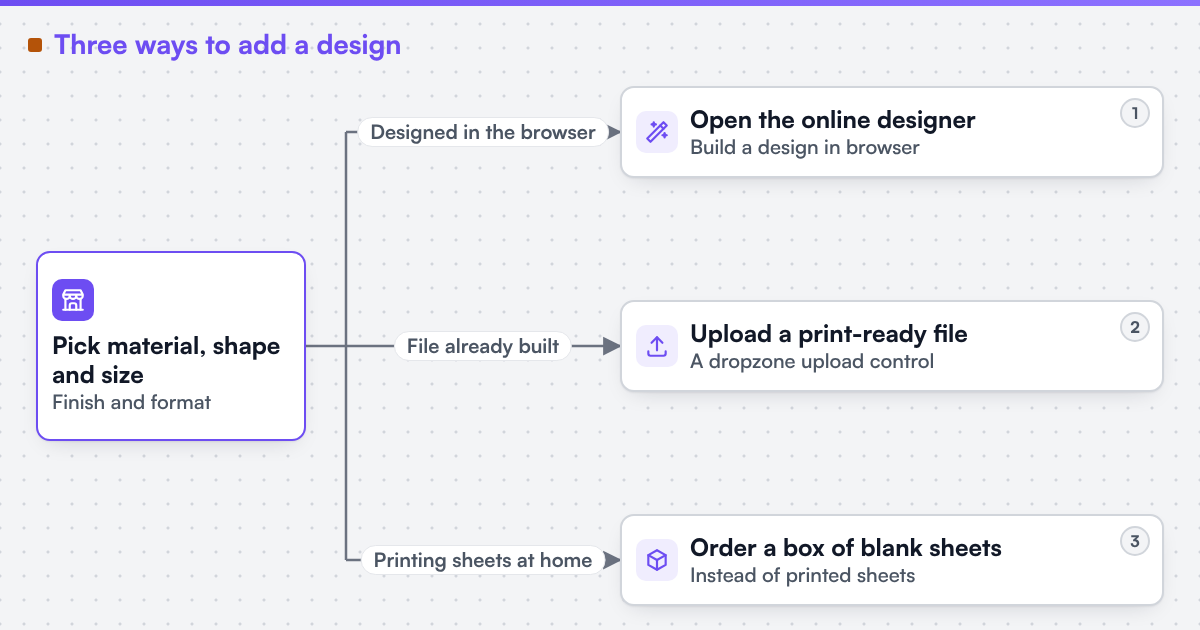
FrancEtiquettes is a French online store selling blank and custom-printed self-adhesive labels in paper, polyester and kraft finishes, through an online designer, a file-upload route and a blank-sheet option. Netbase JSC's records hold a custom engagement from January 2024 to May 2026, across sixteen milestones. The store was live on 2026-10-12.
Learn More
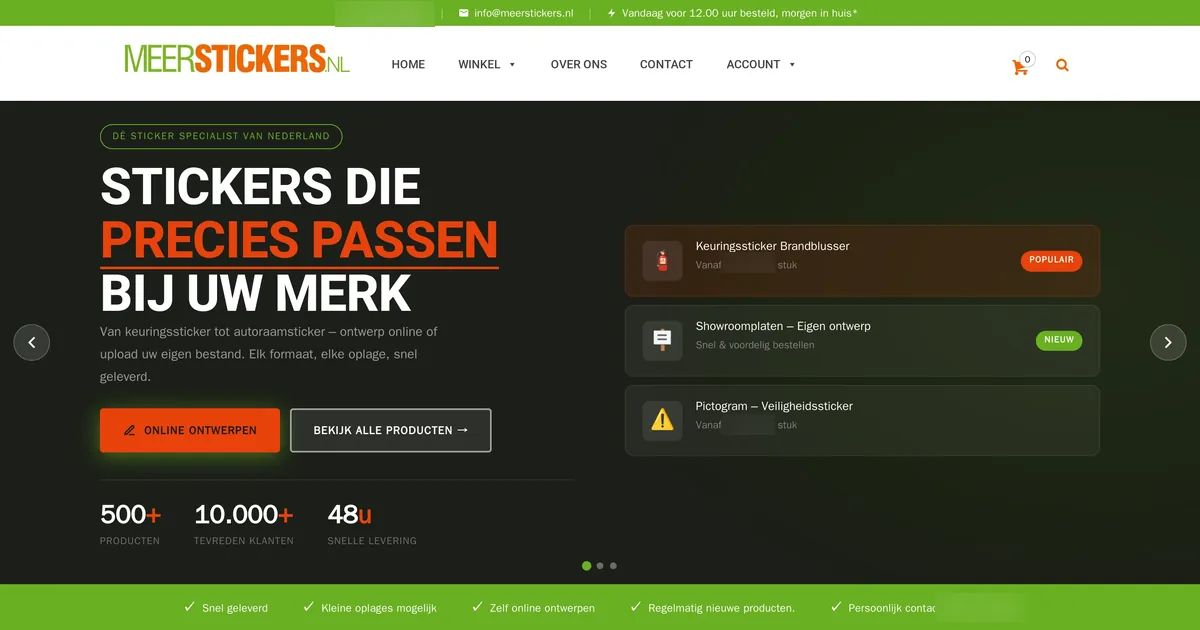
MeerStickers is a packaging labels store in Netherlands. Netbase JSC's project records hold a custom web-to-print engagement for it from 2021-12 to 2026-06, with 5 recorded tasks and 2 milestones. The store runs on WooCommerce and is a live store, checked 2026-10-12.
Learn More
NekedStore is an online store in Budapest, Hungary. Netbase JSC's project records classify a custom web-to-print engagement for its packaging and promotional print catalogue from September 2023 to April 2025: an online designer, pricing logic and artwork tooling. Netbase JSC checked the live store on 2026-10-07; its catalogue today is photobook- and gift-led.
Learn More
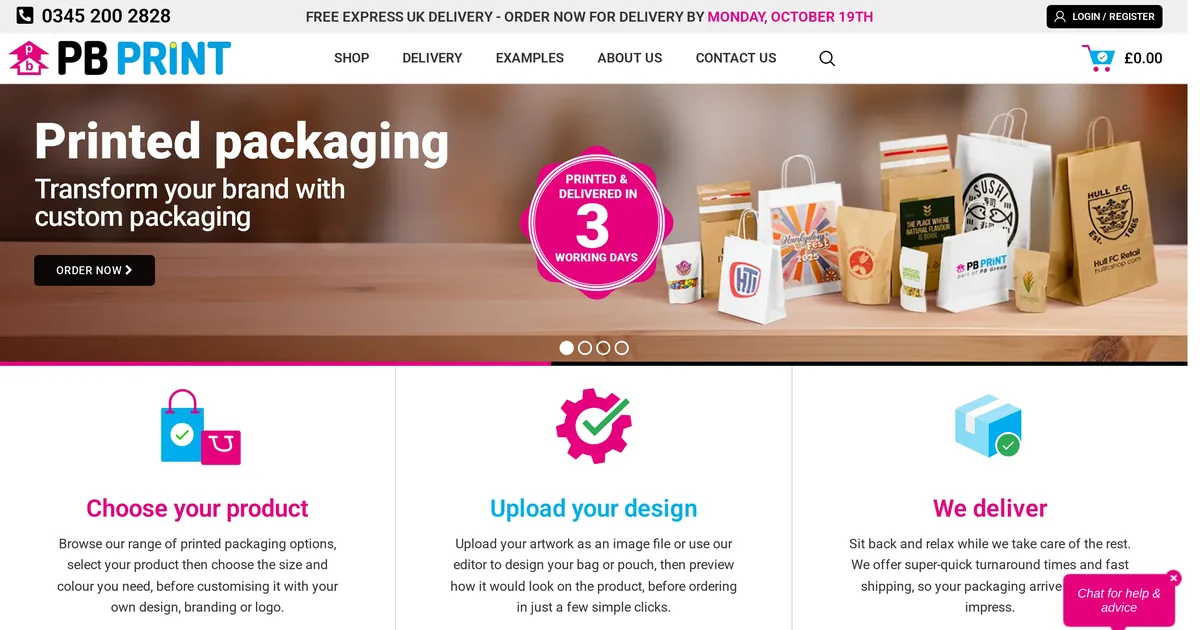
PB Print is a printed paper packaging store in United Kingdom. It is a live store using web-to-print components delivered by Netbase JSC, checked 2026-10-14. The store runs on WooCommerce, in English (UK). Netbase JSC's project index has no row for it, so this page rests on the client wall and the public store.
Learn More
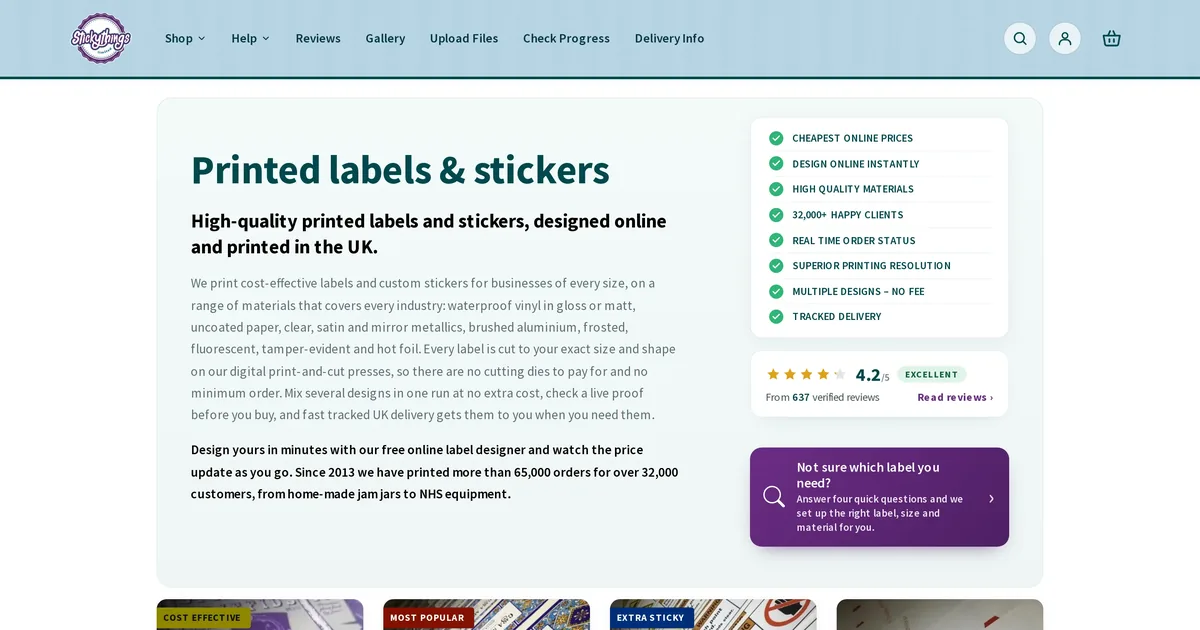
StickyThings is a sticker and label store in United Kingdom. It is a live store using web-to-print components delivered by Netbase JSC, checked 2026-10-14. The store runs on WooCommerce, in English (UK). Netbase JSC's records hold a project record opened in 2023-02 with 1 recorded task.
Learn More
References (3)
- FEFCO, structural design codes for corrugated packaging used to define dielines and folding structures, accessed 2026-09-29.
- Ghent Workgroup, GWG specifications: PDF/X-based settings for print-ready output and proofing, accessed 2026-09-29.
- GS1 US, standards body for barcode and product identification carried on packaging and labels, accessed 2026-09-29.