Ready-made platform
Run it on W2P Solution
A white-label print store with a built-in designer, print pricing rules and a production queue, set up and hosted by the Netbase JSC team.
An AI quote assistant for custom print jobs turns a free-text enquiry for a product outside the catalogue into a structured specification. It collects size, material, finishing, quantity, artwork state and deadline, asks only for missing fields, flags what the catalogue cannot express and hands the record to an estimator, who prices and approves the quote.
Start readingReviewed by CEO, Netbase JSC · Published 25 Nov 2026 · Updated 25 Nov 2026 · 16 min read

An AI quote assistant for custom print jobs is the intake step for work a print shop's catalogue cannot price on its own: a die-cut presentation folder, a box in a size nobody has ordered before, a banner on an unlisted material. The assistant reads the buyer's enquiry, maps it to the specification fields an estimator needs, asks for what is missing and hands over one structured record. It does not calculate the price and it does not promise a date.
This guide is a spoke of AI agents for print sales and support, the service page that covers the whole buyer-facing agent: catalogue quotes, order status and artwork questions. That page shows how a standard enquiry becomes an approved quote through the shop's print pricing engine. This guide covers only the branch where the engine has no answer, and sets out which fields to collect, how to decide a job is custom, what the estimator receives and how to test the assistant before buyers meet it.
The problem it addresses is one print shops name in their own words: the print quote takes too long. For custom work the delay is rarely the arithmetic. It is the third and fourth email asking for the flat size, the board weight or whether artwork exists yet.
A catalogue product has a closed option set: a business card comes in the sizes, stocks and finishes the shop listed, and a pricing engine or the print price calculator can price any valid combination. A custom job has an open option set. The buyer describes an object, not a product code, and often in the vocabulary of the end use ("something to hand out at the trade show that holds our brochures") rather than the vocabulary of production.
Three things go wrong when a standard flow meets that enquiry. A web form built for catalogue products forces the buyer into the nearest listed product, so the estimator prices the wrong thing. A general chat tool answers fluently and invents a price or a lead time. And an inbox with no structure leaves the estimator rebuilding the specification by hand from a thread of emails. A size that is merely non-standard on a listed product is a different problem with its own fix, set out in pricing custom sizes online; this guide is about jobs that are not on the list at all.
| Intake step | Catalogue job | Custom job |
|---|---|---|
| Matching | One product and its option set | No product, or options it lacks |
| Questions | Only the options the product lists | The full custom specification |
| Pricing | Engine price with its trace | No engine price; estimator quotes |
| Approval | Estimator approves engine draft | Estimator prices, checks, approves |
| Hand-off | Draft quote in estimator's queue | Hand-off packet, questions, files |
The table is the routing rule in plain form. The assistant does not need to know how to price a folder; it needs to know that it cannot, and to say so early.
The field set below is a starting point; every shop replaces it with the fields its own estimators ask for before they will price. The source for that list is the shop's sent quotes and the clarification emails that preceded them.
Two rules keep the record honest. The assistant asks only for fields that are empty, in one message where it can, so a buyer who wrote a precise enquiry is not interrogated. And "the buyer does not know" is a valid value: an estimator can work with a known gap, but a guessed board weight produces a quote for the wrong job.
The decision is made against the catalogue data, not by the model's general knowledge. The assistant extracts what the buyer asked for, then a deterministic check compares it with the products and option sets the shop publishes. Three outcomes follow:
The model proposes; the catalogue check decides. That split matters because a language model is good at reading "a folder with a pocket for A4 sheets and a slot for a card" and poor at knowing whether this shop's folding line can glue that pocket.
Inferred values are marked as inferred in the packet. If the buyer wrote "glossy" and the assistant filled "gloss lamination", the estimator sees both the word and the interpretation and can disagree with it.
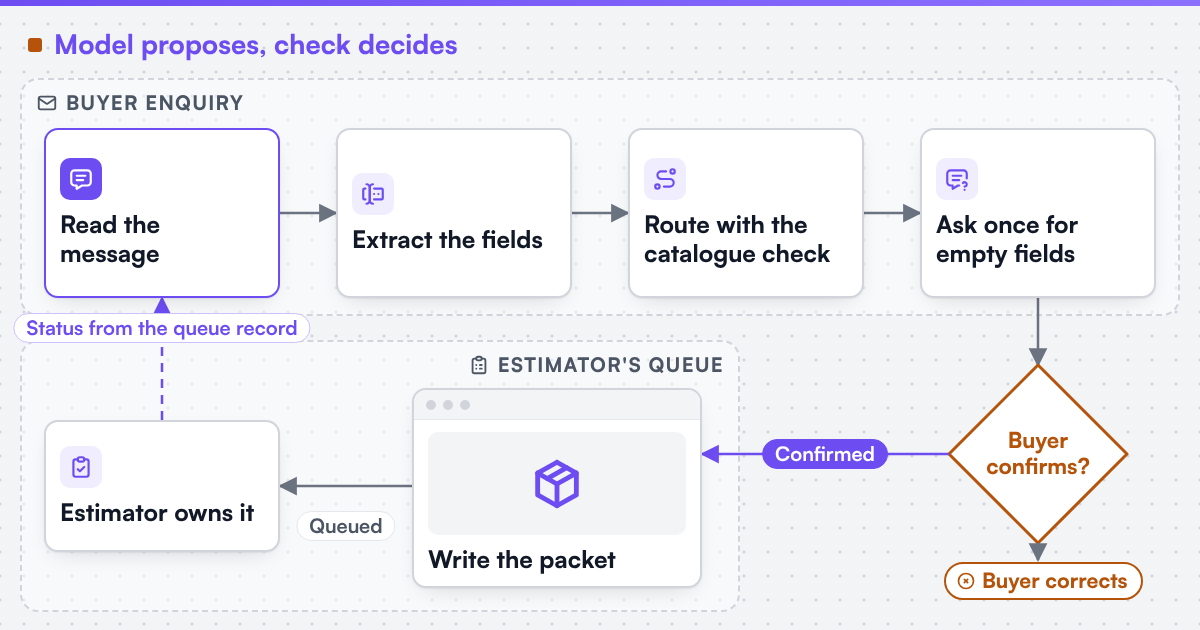 (opens the full-size diagram in a new tab)
The packet is a structured record, validated against a schema before it reaches the queue, so a missing required field fails at intake rather than at the estimator's desk. JSON Schema, whose current published version is 2020-12, is one common way to define and validate such a record. A packet for a custom job carries:
The estimator prices the job, checks feasibility with production, and approves or rejects the draft quote. Once the quote is accepted it becomes an order in the shop's print order workflow, and the specification travels with it, so nobody retypes the job.
The assistant records files; it does not judge them. An attached PDF or photo is listed in the packet with its name and type, and the buyer is told that the file will be checked. File checks belong to the shop's automated preflight rules and to the artwork approval workflow after the quote is accepted.
A sample photo is the one place where an AI reading can save an estimator time: a model can draft a description of a photographed box ("tuck-end carton, window on the front panel") for the estimator to check. We can build AI-assisted steps into print workflows where a human reviews the result, with accuracy measured on the client's own data before acceptance. Netbase JSC develops AI and API automation for print workflows; its print API includes AI artwork jobs that a person approves or rejects. In the packet, any such draft is labelled as a draft and never replaces a measured size. What an AI reading of artwork cannot judge is set out in what AI does not do in a print workflow.
A worked example, with illustrative values. A buyer writes: "We need presentation folders for a conference, with our logo in our brand blue, a pocket inside and somewhere for a business card. About 300. Can you quote?"
The estimator now has one record instead of a thread, and the two open questions are the right ones: they decide tooling and process, which decide the quote.
By design, not by instruction alone. We can build AI agents that collect print enquiry details and answer order-status questions. Prices come from the client's pricing engine, and commitments, refunds and exceptions go to a named person. For custom work there is no engine price, so the assistant has no price to show at all.
Three controls make that hold. The assistant has no tool that returns a price for a custom job, so it cannot look one up. Its replies are checked before sending for figures that look like prices or dates, and a match blocks the reply and escalates. And it is tested with adversarial enquiries: a buyer asking for "a rough number", quoting a competitor, or pasting instructions into the message. The OWASP Top 10 for large language model applications names both risks this guards against: prompt injection (LLM01:2025) and excessive agency (LLM06:2025), where a model is given more authority than its task needs.
Acceptance uses the shop's own history, never a demo script:
The thresholds are agreed with the shop's estimators in writing before testing starts. This page publishes no accuracy figure, because the only figure that means anything is the one measured on that shop's enquiries.
Web2Print Solutions is the web-to-print engineering service of Netbase JSC. Delivery records cited on this site belong to Netbase JSC; where no delivered example of a capability is published, the page says so rather than implying a record. No AI quote assistant delivered under the Web2Print Solutions name is published yet. Netbase JSC, which operates Web2Print Solutions, has delivered 50+ web-to-print platforms; stores that are live today are listed on the live web-to-print stores evidence page.
AI tools assist our own engineering work. A named human engineer reviews and remains accountable for everything we deliver, and no generated output ships unreviewed.
The default engagement is fixed-scope with written acceptance criteria and priced change control. Managed operations is a separate, opt-in agreement.
Production-side AI steps, such as an artwork quality flag, are covered on AI-assisted print workflow features. How a platform that prices by quote presents itself to buyers is covered in quote-only pricing vs subscription.
To scope an AI quote assistant for custom work, start with the service page on AI agents for print sales and support, which sets out what the agent answers and what stays with people. Then send a project brief with twenty anonymised custom enquiries and the specification each one was finally priced on, the fields your estimators ask for before they will price, how custom quotes are approved today, where the estimator's queue lives, and which model providers, if any, your contracts already allow. More technical references are in the guides section.
This guide describes an intake structure and the OWASP, NIST and JSON Schema documents it relies on, read on 25 November 2026; it does not recommend a model provider or a chat product. The field set and the folder example are illustrative, not any shop's specification. Where a technical standard is named, it describes the output specification an engagement produces to, not a credential Web2Print Solutions holds. This site publishes no prices, rates, day rates or payment terms.
No. A custom job has no engine price, so the assistant collects the specification and hands it to an estimator, who prices and approves the quote.
A deterministic check compares the extracted request with the shop's catalogue. No match, or a listed product with an option it does not offer, routes the enquiry to the custom field set.
The assistant records "unknown" and moves on. The estimator sees the gap in the hand-off packet and resolves it, rather than pricing a guessed value.
No. It lists attached files in the packet; preflight and the proof approver check them after the quote is accepted.
That depends on the catalogue data and the estimator queue the shop already has; it is scoped from a project brief, not promised in advance.
Ready-made platform
A white-label print store with a built-in designer, print pricing rules and a production queue, set up and hosted by the Netbase JSC team.
Commissioned build
When the workflow needs rules, integrations or a configurator a standard edition does not cover, the Netbase engineering team scopes and builds it.
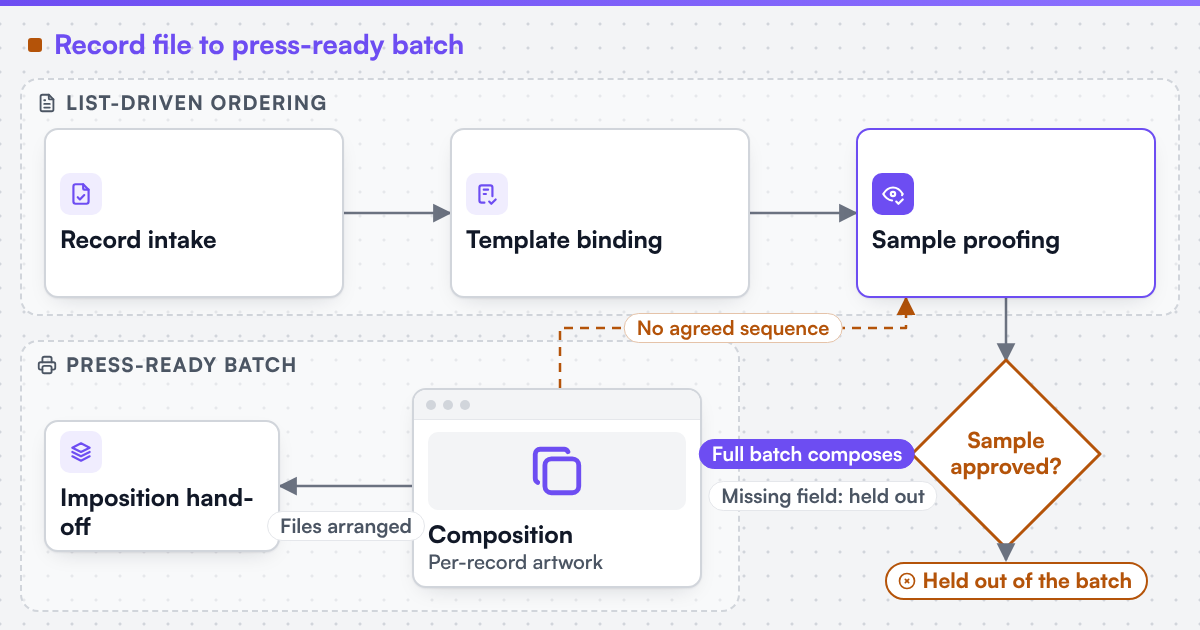
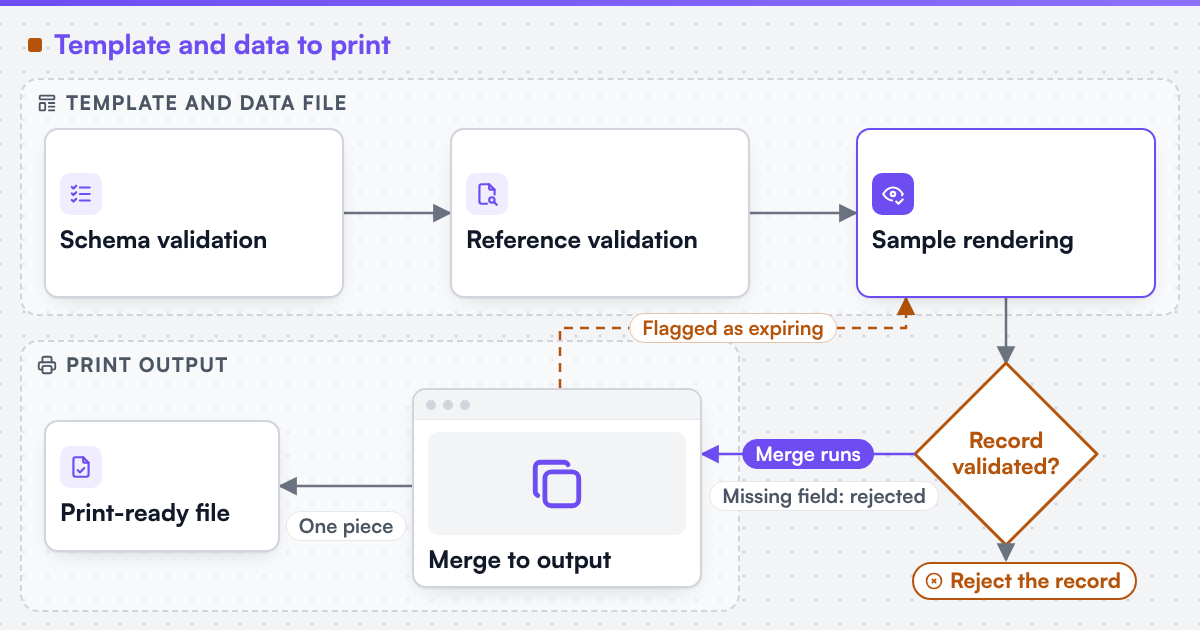 Variable data printing in an online storefront
 Industry
Web-to-print for direct mail and transactional print
 Guide
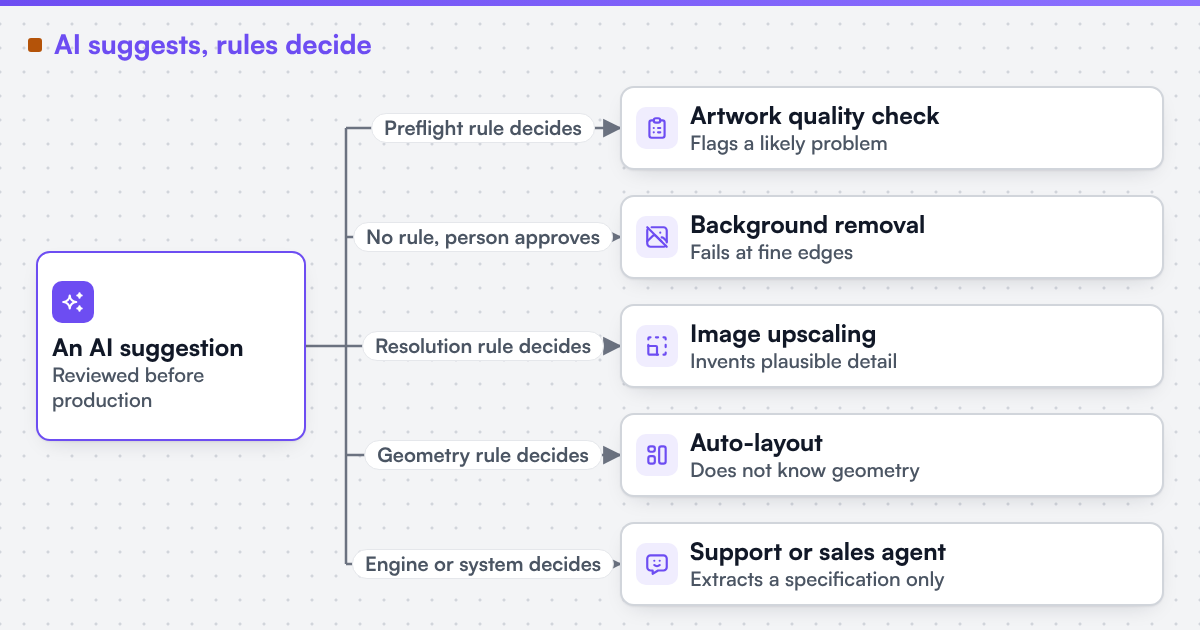
What AI does not do in a print workflow
 Service
AI agents for print shops: quotes, order status and artwork questions
 Service
AI-assisted steps in print workflows
 Service
Print data and reporting automation
Tell us about one product you want to sell online. A senior engineer reads every brief and replies in writing.
I recently had the pleasure of working with NETBASE for a customization project on my WordPress website. From start to finish, the experience was exceptional, and I am thrilled to share my positive review about their outstanding services.
 Jun
Customer ·
 United States
